At We Do The Web Digital Marketing Agency we understand that a website must work harder than you do, and that starts with the very address people type into their browsers. The question Should You Use Your Business Name in Your Domain? is more than a branding curiosity it impacts SEO, trust, memorability and even legal risk. In this guide we walk you through the full decision‑making process, weigh the pros and cons, and give you actionable steps so you can choose the perfect domain for your business.
Using your business name in a domain can boost brand recall, improve click‑through rates and give a small SEO advantage, but it may also limit flexibility, increase trademark risk and become costly if you need multiple extensions. Follow the checklist below to decide whether a branded domain is right for you
What Is a Domain Name and Why Does the Name Matter?
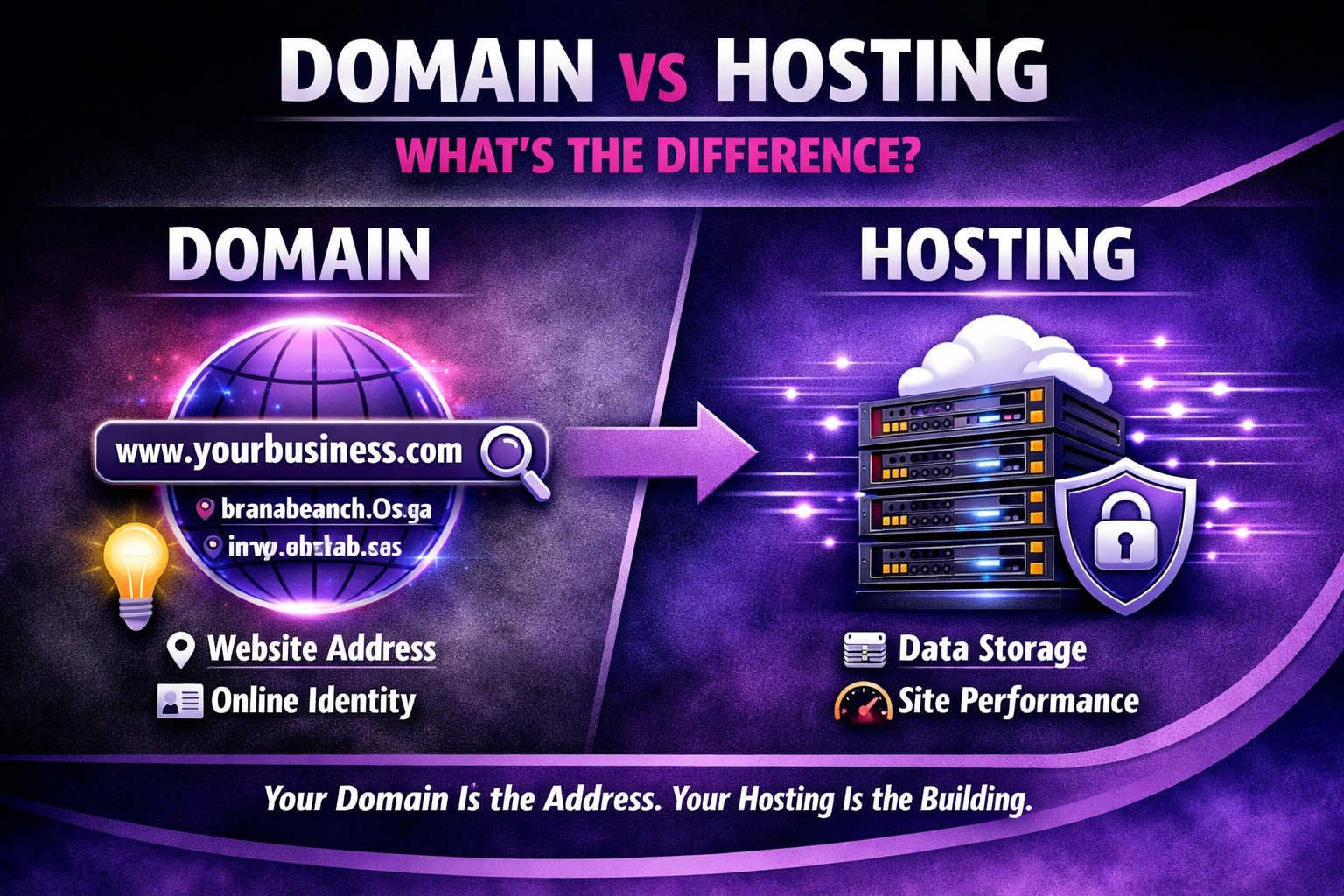
A domain name is the human‑readable address that points to your website’s IP address. It is the first thing visitors see, the URL they share and the string that appears in search results. Because it sits at the intersection of branding, technical routing and search‑engine visibility, the choice of words in that address matters.
Core considerations for any domain
Consideration
Why it matters
Brand alignment
A domain that matches your business name reinforces brand identity and aids recall.
Search relevance
Exact‑match domains (EMDs) can receive a modest click‑through boost in SERPs.
Memorability
Short, simple domains are easier to type and share.
Legal risk
Using a name that is already trademarked can lead to disputes or forced domain loss.
Future flexibility
A highly specific domain may become limiting if the business pivots or expands.
Benefits of Using Your Business Name in the Domain
Instant brand recognition: Users see the brand they already know, which builds trust before they even land on the site.
Higher click‑through rates: Search results and social posts featuring the brand name often earn more clicks (studies show a 5‑10 % uplift).
Consistent email address : A branded domain gives you professional email addresses (e.g., info@yourbusiness.co.za).
SEO advantage (small but real): Exact‑match domains can signal relevance for brand‑related queries, especially for “brand‑name + services” searches.
Defensive ownership: Registering the brand name prevents competitors or squatters from snapping it up.
Drawbacks and Risks
Drawback
How it can affect you
Length & complexity
Long business names result in long URLs that are hard to type and may be truncated in ads.
Limited expansion
If you later diversify (e.g., add a new product line), a narrowly‑named domain could feel restrictive.
Trademark conflict
Using a name that is already protected can lead to legal challenges and domain loss.
Cost of multiple extensions
To protect the brand you may need to purchase *.com, *.co.za, *.org, *.net* etc., increasing annual expenses.
Potential SEO dilution
Competing against a generic keyword‑rich domain may be harder if you rely solely on a brand‑only URL.
When to Avoid a Pure‑Brand Domain
Your business name is very long (more than 15 characters) brevity matters.
You plan to re‑brand or broaden your offering consider a descriptive or niche‑focused domain instead.
The name is not trademark‑clear perform a trademark search first.
You are on a tight budget buying every TLD variant may be unaffordable.
How to Decide A Simple Checklist
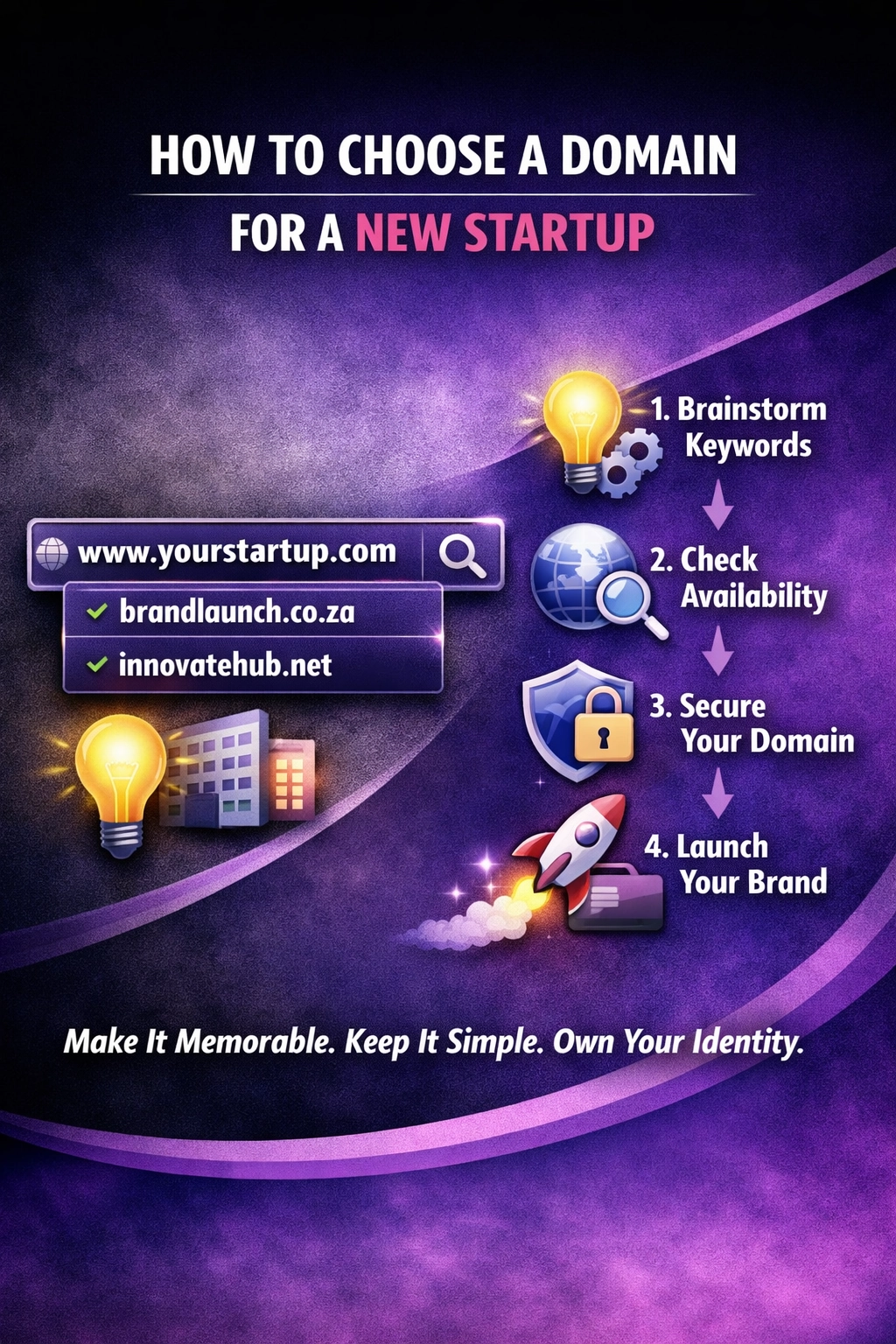
Check availability & length: Use a registrar’s bulk‑search tool (GoDaddy, Namecheap) to see if the exact name is free across *.com, *.co.za, .org.
Run a trademark search: In South Africa use the CIPC database; internationally check USPTO or EUIPO.
Evaluate brand goals: If brand recall is your priority, a perfect‑match domain wins.
Consider SEO strategy: Pair a brand domain with a keyword‑rich sub‑domain or landing page if you need extra relevance.
Plan for protection: Register the primary TLD plus common alternatives, enable WHOIS privacy and set up automatic renewal.
Future Outlook Brand Domains in an AI‑Driven World
Search engines are moving toward answer‑engine and voice‑search experiences. When a user asks, “Where can I get coffee in Cape Town?” the AI looks for authoritative, brand‑aligned sources. A domain that exactly matches the business name can help the brand appear in featured snippets and voice‑assistant answers, especially if the site’s structured data (Schema.org) is correctly implemented.
However, AI also favours relevant content over exact matches, so the real power lies in pairing a brand domain with high‑quality, locally‑optimised content and structured data.
Actionable Tips Implementing a Brand‑Focused Domain Strategy
Secure the brand across major TLDs (* .com, .co.za, .net*) within 24 hours of registration.
Set up 301 redirects from the secondary domains to your primary site to consolidate link equity.
Enable DNSSEC to protect against hijacking.
Create professional email addresses (e.g., hello@yourbusiness.co.za) to reinforce brand credibility.
Add structured data (Organization schema) on the home page to help search engines associate the domain with your brand name.
Monitor brand mentions with tools like Google Alerts; if you see a competitor using a similar domain, consider defensive registration.
Should I include my exact business name in the domain?
Including the exact business name gives instant brand recognition, modest SEO benefits and a professional email address, but you must ensure the name is short, trademark‑clear and you can protect it across key TLDs.
Does a branded domain improve SEO rankings?
A branded (exact‑match) domain can give a slight click‑through boost for brand‑related queries, but overall SEO success still depends on quality content, backlinks and technical optimisation.
What about using hyphens or numbers in a brand domain?
Hyphens and numbers make a domain harder to remember and can look spammy, reducing brand trust. Use them only if the plain name is unavailable and you still need the exact phrase.
Should I buy multiple extensions (.com, .co.za, .net) even if I only use one?
Yes buying the most common extensions protects your brand from squatters and allows you to set up redirects that funnel all traffic to your primary site.
How do I protect my domain from trademark disputes?
Conduct a thorough trademark search in your jurisdiction before registering, use WHOIS privacy, and register the name in the key TLDs you plan to use. If a conflict arises, having the domain already under your control strengthens your legal position.
Conclusion Make an Informed Choice for Your Brand
A domain is the digital front door to your business. Should You Use Your Business Name in Your Domain? The answer depends on your branding goals, SEO strategy, legal clearance and future flexibility needs. By following the checklist, securing the name across major extensions and pairing it with a well‑optimised, mobile‑first website, you turn a simple address into a powerful brand asset.
We Do The Web Digital Marketing Agency can help you audit your brand, register the perfect domain, set up professional email and implement the technical foundations (DNSSEC, redirects, schema) that keep your online identity secure and searchable.
We build these for you contact us today and let us secure the right domain for your business, today and tomorrow.
At We Do The Web Digital Marketing Agency, we understand that choosing the right domain and hosting services can be a daunting task. In this guide, we’ll walk you through the essential considerations when selecting a domain and hosting service for your website. FeaturedA domain is the address of your website (e.g., www.example.com), while hosting […]
A domain name’s life isn’t linear – it moves through registration, active use, renewal, expiration, redemption, pending deletion and final removal. Master each phase to protect your brand.
We Do The Web is a leading digital marketing agency offering a comprehensive range of services to help businesses succeed online. Our expert team specializes in creating customized strategies in SEO, social media, content marketing, and web design. We’re here to elevate your brand, increase your visibility, and help you achieve measurable growth in today’s digital landscape.